

Lines vs. Clusters: Choosing the Slot Pay Model That Works for Your Bankroll

Recommended casinos
When we sit down to play online slots, one of the most important choices happens before we even hit the spin button—choosing the pay model. Whether a game pays through traditional lines or through cluster formations defines the overall pacing, volatility, rhythm, and how quickly our bankroll rises or falls. Yet most of us don’t consciously think about this choice, even though it shapes the entire session.
In this article, we’re taking a closer look at paylines vs. cluster pays, not in a technical, abstract way, but in a practical, player-focused breakdown. Our goal is to understand how each system behaves, where they differ, and how to match the right structure to the way we play and the balance we’re working with. Instead of fast, shallow tips, we’ll build deeper explanations and give each section the weight it deserves, so you walk away with a clear sense of which format genuinely suits your bankroll and playstyle.
What Paylines Actually Mean for Gameplay
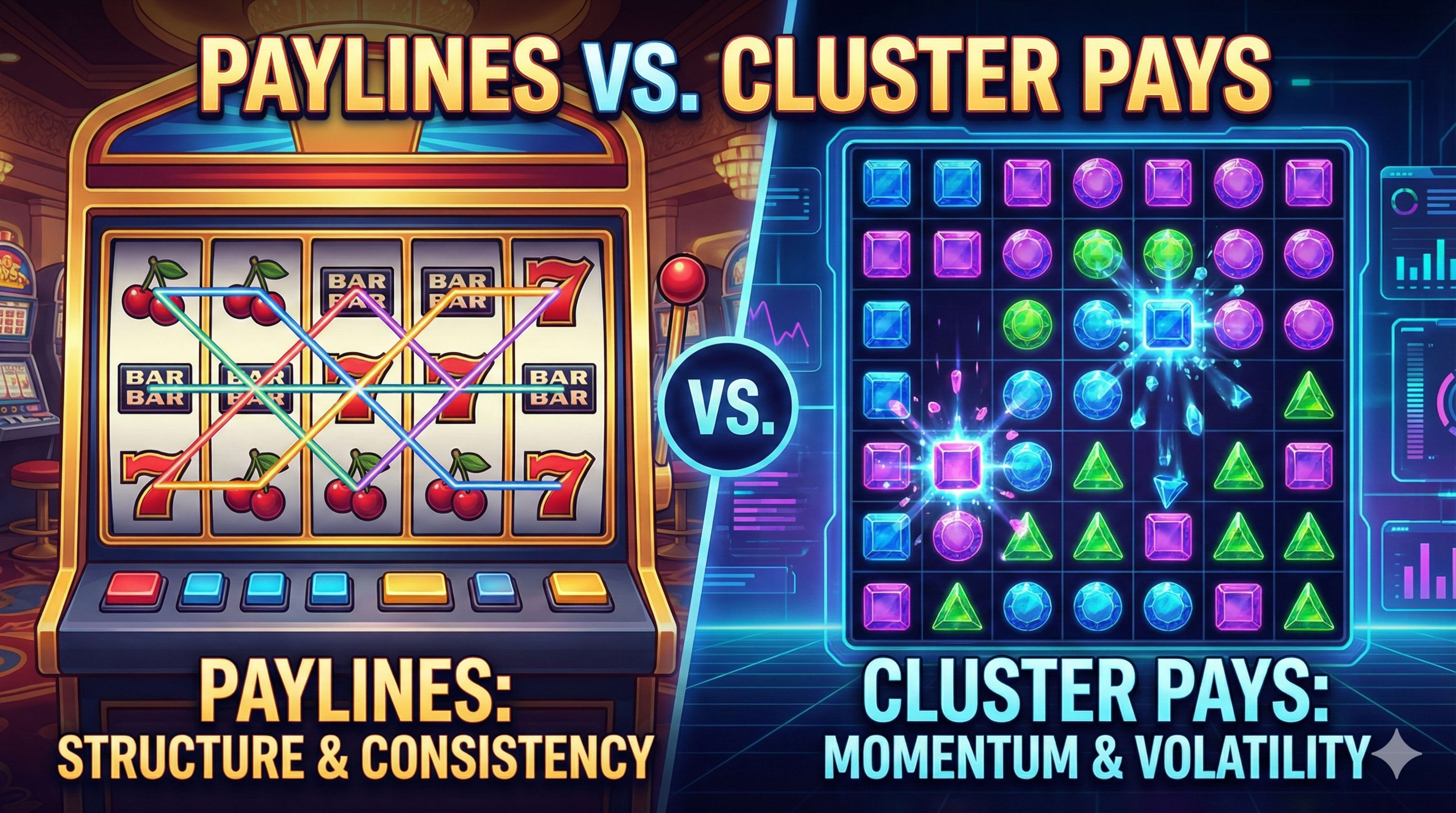
Paylines are among the oldest slot systems, and they remain a core mechanic because they are instantly understandable. A payline is simply a pre-defined pattern where symbols need to land in order to form a win. These can be straight lines, diagonal paths, zig-zag shapes, or complex patterns stretching across five or more reels. Many modern slots offer fixed lines—usually 10, 20, 25, 40, or 50—while others allow us to adjust the number of active lines. Then there are “ways” systems like 243-ways, which aren’t technically paylines but behave similarly by paying left-to-right across all reel positions.
The big advantage of paylines is predictability. We always know where wins can land, and we can instantly recognize a matching pattern without trying to interpret clusters or adjacency rules. This clarity contributes to a smoother play experience, especially for newer players or anyone who likes structure. Even when the game has volatility, paylines still deliver a steady cadence of small to medium returns, which supports longer, more controlled sessions.
How Cluster Pays Change the Feel of a Slot
Cluster pays move in the opposite direction from traditional lines. Instead of needing symbols to land in specific ordered paths, cluster games pay when groups of matching symbols touch each other on the grid. Usually, a cluster requires at least four or five adjacent symbols, but some games push this to larger numbers to unlock better features. Cluster games almost always use a grid layout—5x5, 6x6, 7x7—and pair the system with cascades, symbol drops, charge bars, and modifiers.
Because cluster pays don’t rely on fixed lines, they feel far more dynamic. The grid opens space for chain reactions where one cluster triggers a tumble, the tumble triggers another win, and so on. This creates a sense of motion and momentum that paylines can’t replicate. But it also means cluster games tend to have higher volatility. Instead of small recurring wins, we usually wait for a streak, a multiplier buildup, or a set of cascading hits that finally deliver a meaningful return. The result is an experience built around spikes rather than steady pacing.
Paylines and Clusters Share RTP—But Distribute It Completely Differently
One of the biggest misconceptions in slots is that RTP tells us how “safe” a game is. In reality, many payline and cluster slots share the same RTP values—often between 95% and 96.5%—but the distribution of that return is what makes them feel dramatically different.
Paylines deliver RTP in frequent micro-chunks: lots of small wins, occasional mid-tier hits, and rare bonus spikes. Cluster slots deliver RTP through high-impact moments: fewer wins overall, but when something connects, it can snowball into a huge cascade or multiplier jump. That difference in distribution is why bankroll behavior varies so much between the two systems, even when the official numbers look similar.
Paylines vs. Clusters: A Practical Comparison
Here’s a straightforward overview to help visualize the core differences:
| Feature | Payline Slots | Cluster Pay Slots |
|---|---|---|
| Win Structure | Wins follow fixed lines or ways | Wins form through adjacent symbol groups |
| Hit Frequency | Frequent small wins | Infrequent but larger wins |
| Session Rhythm | Smooth, predictable, steady | Swingy, momentum-based, explosive |
| Volatility Trend | Low to medium | Medium to high |
| Best Bankroll Fit | Smaller balances, long play | Larger balances, high-risk play |
| Bonus Synergy | Scatter-triggered rounds | Cascades, multipliers, charge meters |
| Player Feel | Relaxed and rhythmic | Dynamic and high-energy |
This table highlights the fundamental distinction: paylines build consistency, clusters build intensity.
How Payline Slots Affect Your Bankroll Over Time
Payline slots tend to support longer, slower, and more stable sessions. Their higher hit frequency keeps the balance from swinging wildly, even if the wins themselves are modest. For players who prefer controlling their playtime, paylines make it much easier to manage expectations and pace.
Steadier Hit Rates Mean Less Stress on the Balance
Because paylines award small wins regularly, the balance drains more slowly. Even cold spells tend to be shorter, and the cost of “unlucky streaks” is less punishing. This makes them ideal when we want to stretch €20 or €30 into a full session rather than risk it on a few volatile spins.
Lower Volatility Helps Support Smaller Stakes
Low-to-medium volatility is the natural home of most payline games. Even if the bonus rounds don’t explode often, they typically deliver medium-sized returns that compensate the grind without pushing us deep into loss territory.
Strong Option for Casual Play and Predictable Session Length
Paylines shine when we want a predictable experience—maybe something calm, rhythmic, and easy to follow. If we only have 15–20 minutes and prefer not to risk sudden balance drops, paylines offer structure and comfort.
How Cluster Pay Slots Behave With Real-World Bankrolls
Cluster slots operate with a very different identity. Instead of feeding us a constant stream of small results, they hold back value and release it in bursts—usually during cascades, multiplier builds, or high-potential bonus rounds.
Lower Win Frequency Means Larger Swings
Cluster games can easily go through long sequences without meaningful wins. These gaps aren’t flaws—they’re part of the core math design. When a streak finally lands, the game “unlocks” a chain of events that can pay multiples of the bet in a single sequence. This structure is exciting, but it requires us to accept variance mentally.
Momentum Matters
Cluster slots often rely on sequences where a single starting win creates multiple additional drops. The thrill comes from the potential of the chain reaction, not from the initial hit. These cascading moments create adrenaline because we know everything depends on how long the streak continues.
Better Suited for Larger or More Flexible Bankrolls
Because cluster volatility can dry a small balance quickly, they’re easier to enjoy when we have more room to absorb variance. Even €50 behaves differently in a cluster slot than €20 in a payline game. It’s not about high stakes—it's about giving the math space to perform.
Bonus Rounds: Where the Pay Models Truly Diverge
Bonuses reveal the deepest contrast between these pay systems.
Payline Bonuses Provide Controlled Value
Payline bonuses often rely on free spins, stacked symbols, simple multipliers, or expanded lines. While they can hit big, most payline bonuses produce medium-sized results that align with the game’s long-term structure. That consistency is part of the appeal: we go in knowing the bonus is likely to pay something, even if not spectacularly.
Cluster Bonuses Deliver Massive Upside or Sudden Drop-Offs
Cluster bonuses usually amplify the core volatility:
- symbol upgrades
- persistent multipliers
- expanding grids
- tumbling sequences that multiply on each cascade
A cluster bonus can fizz out quickly, but when it lands a strong chain or multiplier, the results can dwarf anything a low-volatility payline game produces. That’s why cluster bonuses can feel swingy—they’re built for extremes.
Matching a Pay Model to Your Bankroll (Deep, Practical Guidance)
Instead of giving short one-sentence tips, let’s build a clearer, more thorough decision model. Picking between paylines and clusters isn’t about personal preference alone; it's about aligning gameplay with what your bankroll can realistically support.
Start With Your Balance Size and Session Goal
Small balances thrive on consistency. If we’re working with €10–€30 and want a long session, paylines give us the best chance of steady returns and manageable volatility. Cluster games, by comparison, can drain that same amount in minutes during a cold patch. But if we're sitting on €50, €100, or more—especially during a session where we’re comfortable with risk—clusters become much more viable.
Consider How Long You Want to Play
Short sessions favor paylines. When we only have a little time, we want a structure that provides quick feedback without long droughts. Cluster pays need space to breathe—which means they're more suited to longer, relaxed sessions where we can tolerate a slower start in exchange for volatility peaks.
Think About Your Emotional Response to Volatility
Some players enjoy volatility; others get stressed by it. Paylines keep emotional swings mild by offering a steady flow of wins. Cluster slots amplify emotions—there’s anticipation, tension, momentum, and occasionally frustration when a cascade ends one symbol short. Matching your emotional tolerance to the pay model is one of the most important (but least discussed) parts of choosing the right game.
Decide Whether You Want Structure or Chaos
Playlines offer structure: predictable pacing, clear win patterns, and consistent bet behavior. Cluster slots offer controlled chaos: chain reactions, unexpected highs, and rapid swings. Neither is superior—each appeals to a different mindset.
Pick the System That Fits Your Mood and Bankroll Right Now
There’s no universal answer. The “right” model changes with our mood, the time we have, and the amount we’re comfortable playing with today. Being deliberate—choosing a pay model based on what we want from the session—makes the experience far more enjoyable and keeps bankroll expectations realistic.
Final Thoughts: Both Pay Models Are Strong—When We Use Them Intentionally
Paylines and cluster pays are two sides of the modern slot experience. Paylines emphasize consistency, structure, and reliable pacing, making them ideal for smaller bankrolls or players who prefer a calm session. Cluster pays emphasize momentum, volatility, and high-impact events, creating some of the most exciting modern slot experiences when we have the balance and mindset to support them.
When we match our bankroll and expectations to the right model—rather than picking a game at random—we take control of the experience. And with that control, every session feels more purposeful, more enjoyable, and far better aligned with the kind of gameplay we actually want.